

Biotech is like the superhero of science, swooping in to save the day with its incredible ability to harness living organisms for human benefit. Imagine a world where tiny microbes help produce life-saving medicines or genetically modified crops feed the hungry. It’s not just science fiction; it’s happening right now!
What Is Biotech: An Overview
Biotechnology refers to the use of living organisms for practical applications. This field spans multiple industries, including healthcare, agriculture, and environmental science. With roots in traditional practices like fermentation, biotech has evolved into a sophisticated discipline driven by advances in molecular biology.
One critical application of biotech lies in medicine. Genetic engineering and recombinant DNA technology enable scientists to develop therapies that target specific diseases, such as cancer and genetic disorders. These innovations lead to the production of insulin, monoclonal antibodies, and vaccines. The safety and efficacy of these biopharmaceuticals prove beneficial for a wide range of patients.
Agricultural biotechnology plays a vital role in food security. Genetically modified organisms (GMOs) resist pests and tolerate harsh environmental conditions. These enhancements result in higher yields and reduced reliance on chemical pesticides. Research shows that biotech crops can significantly decrease crop loss and support sustainable farming practices.
Environmental applications of biotechnology focus on remediation and conservation. Bioremediation utilizes microorganisms to degrade pollutants in soil and water, helping restore contaminated environments. Innovations in this area include biofuels, which utilize plants and algae for renewable energy production, reducing reliance on fossil fuels.
The global biotech industry continues to expand, influencing economies and improving lives. As researchers unlock new potentials of living organisms, biotechnology promises to address challenges such as healthcare access and climate change. Future advancements are likely to shape a healthier, more sustainable world.
The History of Biotechnology
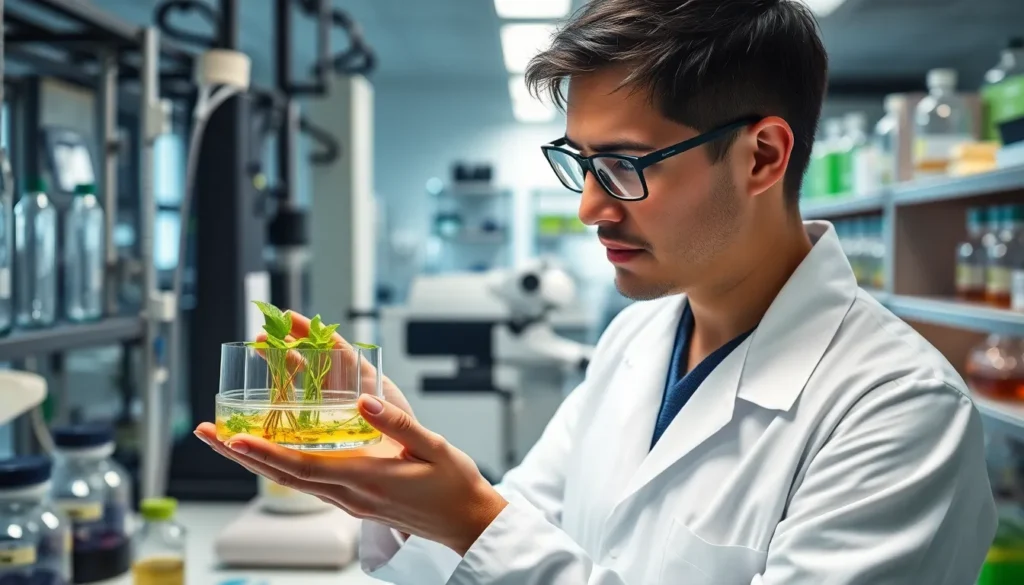
Biotechnology’s history spans thousands of years, showcasing a journey from ancient practices to cutting-edge technologies. Early civilizations embraced fermentation, using microorganisms to create foods and beverages.
Early Developments
In ancient Egypt, individuals harnessed yeast to brew beer and bake bread. The Greeks contributed with selective breeding of plants and animals, enhancing desirable traits. Notable advancements continued through the Middle Ages, where alchemy and herbal medicine laid foundations for future exploration. In the late 19th century, Louis Pasteur’s germ theory revolutionized understanding of disease and fermentation. His work paved the way for modern microbiology, essential for biotech progress.
Modern Advances
The 20th century ushered in groundbreaking techniques, including the discovery of DNA’s structure by Watson and Crick in 1953. This discovery sparked innovations in genetic engineering and recombinant DNA technology. Scientists began manipulating genes, leading to significant strides in medicine, agriculture, and environmental science. The introduction of genetically modified organisms in the 1990s transformed farming practices, increasing crop resilience and yield. Today, biotechnology continues evolving, integrating advanced tools like CRISPR for precise gene editing, shaping a future rich with potential and solutions.
Key Technologies in Biotechnology
Biotechnology thrives on several key technologies that drive innovation and advancements across various fields. Genetic engineering and CRISPR represent notable examples that transform possibilities in healthcare and agriculture.
Genetic Engineering
Genetic engineering involves modifying an organism’s genetic material. This technique enables scientists to introduce, delete, or alter DNA sequences. Applications include producing biopharmaceuticals like monoclonal antibodies and insulin. Many crops are engineered for traits such as pest resistance and drought tolerance. Benefits include increased yields and reduced need for chemical pesticides. Researchers continue exploring genetic engineering’s potential to enhance nutritional content and improve crop resilience.
CRISPR and Gene Editing
CRISPR technology revolutionizes gene editing with its precision and efficiency. It allows for specific targeting of DNA sequences to create desired changes. This powerful tool has applications in agriculture, where it improves crop traits. In medicine, researchers investigate using CRISPR for treating genetic disorders and cancers. Successes include experiments that demonstrate its ability to eliminate certain diseases at the genetic level. The simplicity of the CRISPR mechanism has sped up research and development within biotechnology, opening avenues for revolutionary therapeutic options.
Applications of Biotechnology
Biotechnology encompasses a variety of applications across multiple sectors. The following sections outline its critical roles in medicine, agriculture, and industry.
Medical Biotechnology
Medical biotechnology significantly impacts healthcare by developing novel therapeutics. Genetic engineering techniques enable the production of biopharmaceuticals like insulin, monoclonal antibodies, and vaccines. Innovative approaches focus on targeted therapies for complex diseases, including cancer and genetic disorders. Research continues to explore gene therapy options, which hold potential for curing hereditary conditions. It enhances diagnostic tools as well, allowing for earlier detection of diseases through advanced biomarkers. Precision medicine tailored to individual genetic profiles transforms treatment paradigms, emphasizing personalized healthcare solutions.
Agricultural Biotechnology
Agricultural biotechnology enhances food security through the creation of genetically modified crops. These crops demonstrate resistance to pests and tolerance to environmental stressors, promoting higher yields. Furthermore, such advancements reduce the need for chemical pesticides, fostering environmental sustainability. Traits such as drought resistance increase resilience against climate variability. Scientists continue to explore applications in livestock, improving health and productivity through genetic improvements. Enhanced nutritional profiles in crops address malnutrition, making them crucial in global efforts to alleviate hunger.
Industrial Biotechnology
Industrial biotechnology focuses on sustainable production methods that reduce environmental impact. Bioprocesses utilize microorganisms and enzymes to create biofuels, biodegradable plastics, and other valuable materials. Efficiency gains are achieved by optimizing fermentation processes to produce chemicals from renewable resources. Organizations prioritize green chemistry initiatives that minimize waste and energy consumption in production. Techniques such as synthetic biology enable companies to engineer microorganisms for specific tasks, enhancing productivity and sustainability. This sector supports the transition to a circular economy by promoting recycling and resource conservation.
Ethical Considerations in Biotechnology
Ethical considerations play a crucial role in biotechnology’s advancement. Concerns about genetic privacy arise with the increased use of genetic data for research and treatment. Individuals may fear unauthorized access to their genetic information. Protecting this sensitive data becomes essential, ensuring informed consent and confidentiality within biotechnological applications. Guidelines must establish boundaries and foster trust between researchers and the public.
Environmental impact also requires careful consideration in biotechnology. Using genetically modified organisms may enhance agricultural productivity, yet potential ecological consequences exist. Biodiversity can get affected if GMOs crossbreed with wild relatives, potentially disrupting ecosystems. Responsible practices must evaluate the long-term effects of biotechnological innovations on local environments. Sustainable approaches promote harmony between human needs and ecological preservation, reflecting the importance of environmental ethics in biotechnological advancements.
Biotechnology stands as a beacon of hope and innovation across multiple sectors. Its ability to harness the power of living organisms is reshaping healthcare agriculture and environmental practices. With ongoing advancements in genetic engineering and sustainable production methods the potential for biotechnology to address pressing global challenges is immense.
As the industry continues to grow the ethical considerations surrounding its applications will remain crucial. Balancing progress with responsibility ensures that biotechnology not only improves lives but also protects the planet for future generations. Embracing this transformative field is essential for creating a healthier more sustainable world.


